
Let me say the quiet part first: Flagstaff is Arizona's most expensive major housing market outside the Scottsdale and Paradise Valley resort submarkets. The citywide median sale price is about $700,000 as of spring 2026 per Redfin, and the median for a detached single-family home ran roughly $794,000 in 2025 per local MLS data. If you're comparing us to Phoenix, Tucson, or Prescott, we are the expensive one, and anyone who tells you otherwise is selling something.
But "expensive" is only half a budget. Arizona's tax structure gives a lot back, the climate costs are real but specific, and knowing the honest numbers up front is exactly how you avoid falling in love with a home you can't comfortably carry. Here is the whole picture as I'd give it to a friend.
Housing: The Line Item That Decides Everything
Housing drives nearly the entire cost gap between Flagstaff and everywhere else in Arizona. The reference points, all from spring 2026 data: about $700,000 median sale price citywide (Redfin, up 3.9% year over year), a Zillow home value index near $668,000, and a detached single-family median around $794,000 per local MLS trend reporting.
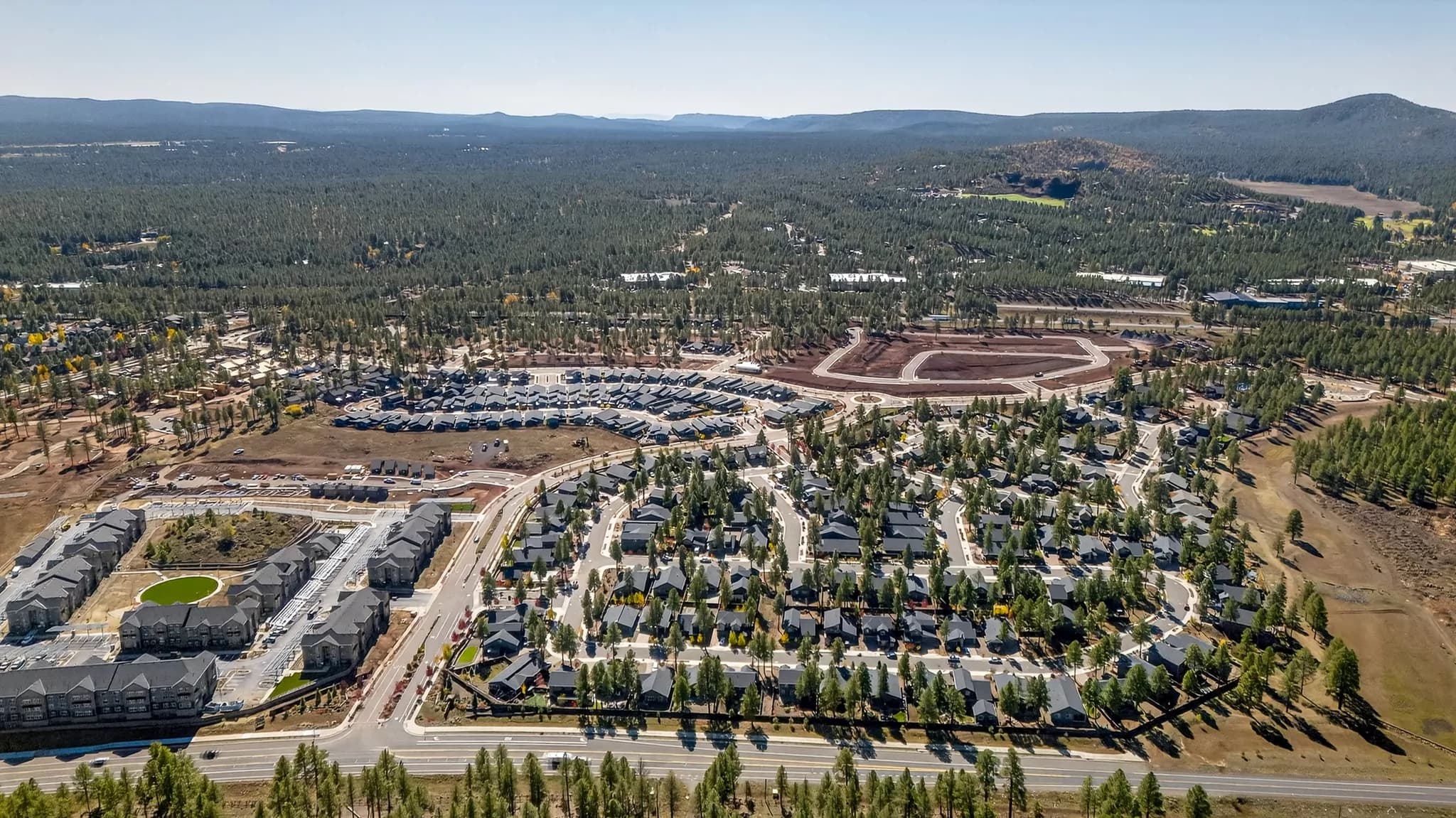
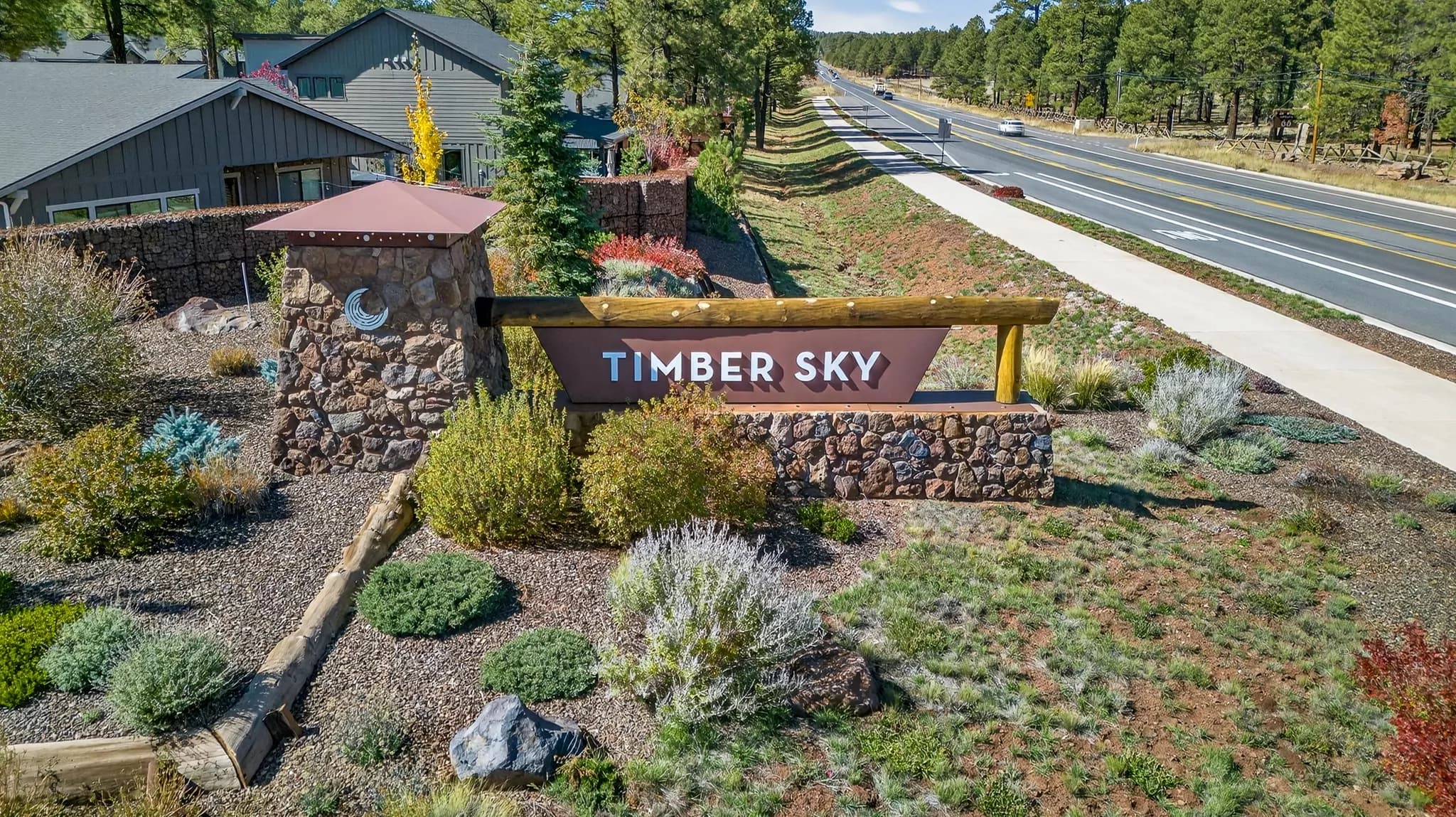
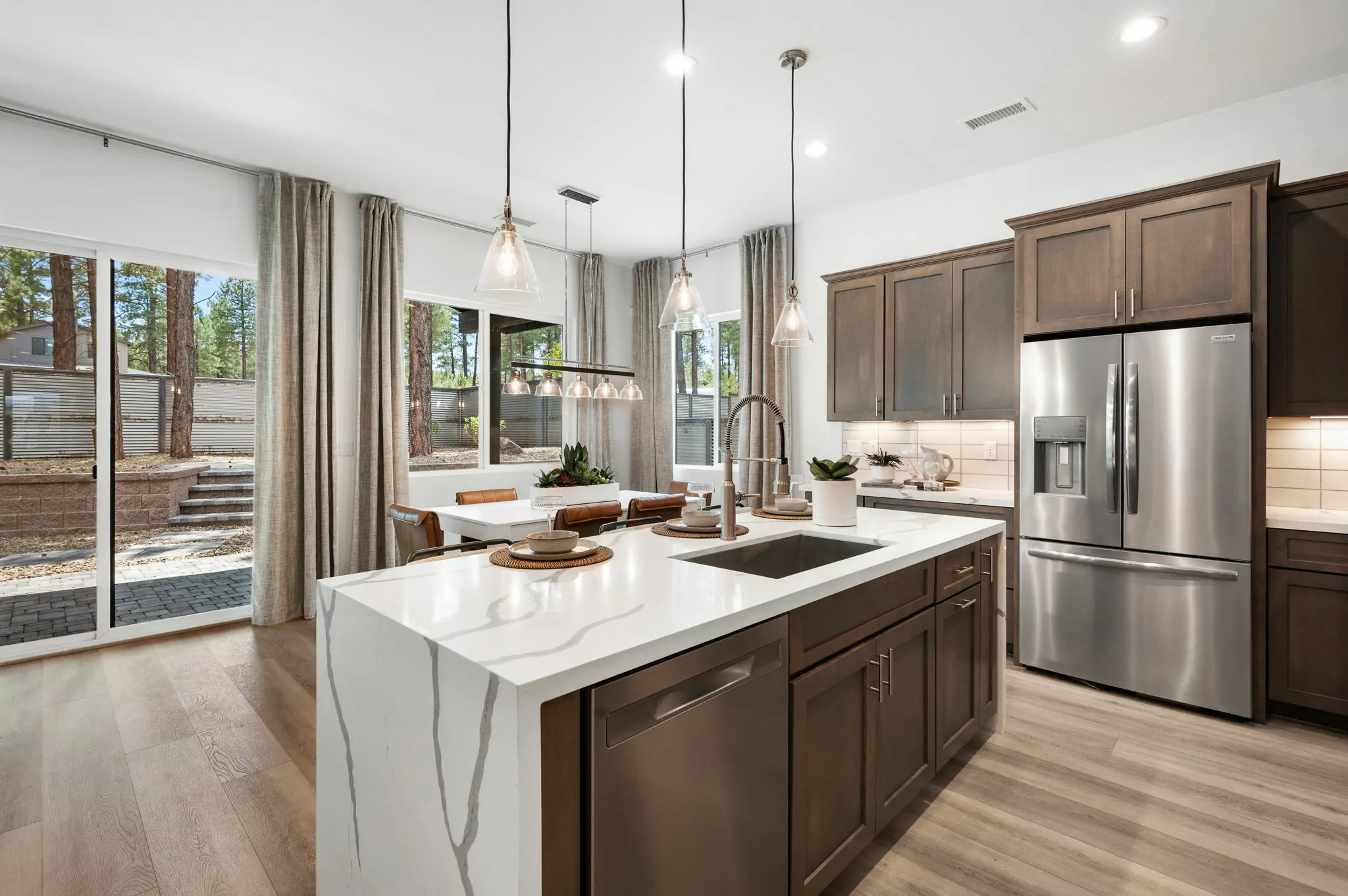
New construction, which is my world, spans a wide band. Townhomes at The Point at Canyon del Rio carry base pricing from $653,900, with finished quick move-in homes running about $888,000. Single-family at Timber Sky starts at $714,900 in Corvus and $785,900 in Sirius. From there it steps up: Juniper Point II in the southeast pines from $1,054,900, Aspen Ridge II golf-course townhomes from $1,050,900, and fully custom homes at Woody Mountain Estates from the low $1 millions, with completed customs commonly $1.5 to $2.5 million.
Why Is Flagstaff So Expensive?
This is the most common question I get from relocating buyers, and the answer is geography and math, not hype.
About 73% of the land around Flagstaff is national forest. Add state trust land, tribal land, and the dark-sky protections around the observatories, and there is almost nowhere for the city to grow. Between 2000 and 2020, Flagstaff added more than 29,000 households but only about 28,000 housing units. The city declared an affordable-housing emergency in 2020 and estimates a shortage of roughly 8,000 homes by 2031 in its 10-Year Housing Plan.
On the demand side, more than 2,700 active short-term rental listings (averaging around $270 a night) compete with residents for housing stock, and a steady flow of second-home buyers from Phoenix, 144 miles and 20 to 30 degrees away, keeps pressure on the same limited inventory. Note what is not on this list: population growth. Flagstaff's population is about 77,260 and essentially flat. This is a supply-constrained market, not a boom town. That distinction matters, because supply problems don't resolve quickly, and this one is written into the map.
The Tax Side: Where Flagstaff Gives Money Back
Property taxes here genuinely surprise people from out of state, in a good way. Flagstaff's median effective property tax rate is about 0.47%, below the Arizona median and less than half the national norm, per Ownwell's Coconino County data. Typical annual bills run roughly $2,020 to $2,639 depending on your ZIP code and which school, fire, and special districts your address sits in. On a $700,000 home, that is a fraction of what the same house would cost you in tax in Texas, Illinois, or New Jersey.
Arizona's income tax is a flat 2.5% per the Arizona Department of Revenue, one of the lowest state rates in the country. For a California household in a high bracket, the state income tax swing alone can be five figures a year. If you're running that comparison, the relocating from California guide walks through it in detail.
So the honest framing is: you pay more for the house, and then the carrying costs are unusually gentle. For buyers arriving with equity, that trade often works out better than they expect. The home value page is the place to start if you're sizing up what your current home brings to the table.
Utilities, Snow, and the 7,000-Foot Line Items
Flagstaff sits at about 7,000 feet, and the climate budget has a shape you should know before you commit.
Winter is the season you budget for
Flagstaff averages about 100 inches of snow a year, most of it December through March, which makes it one of the snowiest cities of its size in the country. That is a lifestyle feature, Arizona Snowbowl is 14 miles from town, but it is also a budget line: real winter tires or AWD, a snow blower or a plowing arrangement for your driveway, and heating bills that peak in the same months. I won't quote you a fake average utility bill, because it depends enormously on the home. And this is where my construction background makes me opinionated: the building envelope is the whole game. A tight, modern, energy-rated home at this elevation heats for meaningfully less than a leaky 1970s rambler of the same size. Capstone builds to the Department of Energy's Zero Energy Ready standard and ENERGY STAR certification, and at 100 inches of snow a year, that is not marketing, it is your gas bill.
Summer is the season you stop paying for
July highs average 80 to 82 degrees, which is 20 to 30 degrees cooler than Phoenix. The brutal four-month air-conditioning season that dominates a Phoenix budget mostly does not exist here. Monsoon season, roughly July through September, brings near-daily afternoon thunderstorms in late summer, dramatic, brief, and free.
Two honest asterisks: wildfire and water
Flagstaff sits in the world's largest contiguous ponderosa pine stand, and the surrounding forests have seen five large wildfires in 15 years, including the 2019 Museum Fire and the 2022 Pipeline Fire. Homes below post-fire burn scars can face monsoon flood risk, and some owners in affected drainages have been urged to carry NFIP flood insurance or have seen insurance premiums climb. Ask about fire and flood exposure for any specific address, I do, on every one.
Water is the question every relocating buyer asks, and the answer is better than most assume: the city holds a state-approved 100-year Adequate Water Supply Designation, and it bought an 8,500-acre ranch east of town years ago specifically to secure future groundwater. Flagstaff plans for water the way it plows snow, seriously.
Pre-Qualifying Yourself: The Order of Operations
Here is the sequence I recommend before you tour a single model home.
First, get real about the price of entry. In-town new construction effectively starts in the mid $600s for townhome base pricing and the low-to-mid $700s for single-family, and finished move-in-ready inventory generally runs higher than base pricing. If the honest budget lands below that, the answer isn't to stretch, it's to look at the perimeter markets like Bellemont or at resale, and I'll tell you that directly rather than waste your weekends.
Second, run the payment, not the price. A $750,000 home at Flagstaff's property tax rates carries very differently than the same sticker in a 2% property tax state. The mortgage calculator lets you see the full monthly picture.
Third, if you're a first-time buyer, know that the City of Flagstaff runs the CHAP down-payment assistance program. Funding and terms change, so check current details at flagstaff.az.gov rather than trusting any blog post's snapshot, including mine.
Fourth, count the offsets: 0.47% median effective property tax, 2.5% flat income tax, a summer with almost no cooling load, and, if you buy new, an energy-rated envelope built for this elevation.
The Bottom Line
Flagstaff costs more because there is almost nowhere left to build, and the mountain lifestyle you're buying, ski hill at 14 miles, forest out the back door, dark skies overhead, 59 miles of in-town trails, is exactly why the demand never lets up. The buyers who do well here are the ones who walk in with clear eyes about the $700,000 median, budget honestly for winter, and then let the tax structure and the energy efficiency quietly work in their favor for the next decade.
If you want to pressure-test your specific budget against what is actually for sale this month, get in touch. I'd rather run the numbers with you before you fall in love with a floor plan than after. The full relocation guide is the natural next read.